
A first half ahead of expectations: 2026 targets raised
Strong growth in operating margins (EBITDAR +18.1%1 and EBITDA +46.3%2 ), and a further increase in occupancy rates (+2.8 pts)
PUTEAUX, France--(BUSINESS WIRE)--Regulatory News:


emeis (Paris:EMEIS):
Strong performance across all of the Group’s markets
-
Revenue rose sharply by +6.0% on a like-for-like basis, representing an increase of +€103 million …
- particularly in Nursing Homes at +7.1% (clinics at +4.1%)
- and internationally at +7.5% (France at +3.7%)
- Occupancy rates rose by an average of +2.8 points (to 89.8%) and exceeded 90% in the second quarter alone, driven by improved sales performance (a +22% increase in the number of prospects3 compared to the first half of 2025)
- A positive trend across all geographic regions, unaffected in the first half of the year by sanitary risks related to a severe flu season and the heat waves, thanks to proactive risk management by EMEIS facilities and teams
Strong growth in operating margins and a significant improvement in net income
-
EBITDAR up +18.1% 1, or +€70 million, demonstrating effective control of operating expenses
- Performance driven by all business segments and geographic regions (particularly in France and Germany)
- As a percentage of revenue, the margin continues to show solid growth, although still below the Group’s targets. It improved by +1.8 pts compared to H1 2025, reaching 15.6%. Growth was particularly strong in Southern Europe and in France
- EBITDA (excluding IFRS 16) rose by +46.3% on a like-for-like basis, or €70 million, to €228 million. This margin represents 7.6% of revenue compared to 5.4% in H1 2025, further evidence of effective control over lease expenses
- EBIT grew by +83.3%, representing an increase of +€85 million to €187 million
- Net Income Attributable to the Group remains negative (-€40M) but shows a significant improvement of +€97M since H1 2025
-
Cash flow metrics were temporarily impacted by one-time effects related to the Group’s normalization (exit from the safeguard plan and normalization of supplier payment processes), as well as by the intentional reduction in the volume of disposals.
While FCF was consequently negative in the first half of the year, recurring free cash flow remained broadly stable, as strong operational growth offset these temporary effects on working capital requirements in particular.
Reduction in net debt and further improvement in the financial leverage ratio
- Net debt stands at €3.9 billion, down -€0.6 billion since the end of 2025, as a result of the closing of the Isemia transaction and other disposals finalized since the start of the fiscal year. 55% of the Group’s debt is now hedged or at a fixed rate
- The Debt-to-EBITDA4 ratio continues to decline rapidly, now standing at 8.7x (vs. 15.4x in H1 2025 and 11.8x at the end of 2025)
First-half performance allows for an upward revision of the 2026 guidance
- Revised 2026 guidance: EBITDAR growth on a like-for-like basis2is now expected to be between +12% and +14% for 2026 (previous guidance indicated growth of at least +10% in 2026)
- Medium-term guidance confirmed: EBITDAR growth on a like-for-like basis2 between +12% and +16% on average (CAGR 2024–2028).
Laurent Guillot, Chief Executive Officer: “emeis’ performance in the first half of the year reflects the strong momentum the Group has built. The significant increase in our occupancy rate, both internationally and in France, combined with rigorous management of our operating expenses, allows us to continue on our path of improving our operating performance at a sustained pace and to raise our EBITDAR growth target for 2026. These results confirm the effectiveness of our business strategy and the remarkable dedication of our teams to support the most vulnerable. In recent days, our teams have once again demonstrated their unwavering commitment in response to the emergency situation in Gironde. I would like to express my deepest gratitude and full support to them during this difficult time.”
About emeis
With nearly 83,500 experts and professionals in healthcare, nursing, and support services for the most vulnerable, emeis operates in some 20 countries and spans five business segments: psychiatric clinics, medical and rehabilitation clinics, nursing homes, home care and services, and assisted living facilities.
Each year, emeis serves nearly 280,000 residents, patients, and service recipients. emeis is committed to addressing one of the major challenges facing our societies: the growing number of people made vulnerable by life’s setbacks, advanced age, or mental illness.
In June 2025, emeis became a mission-driven company, enshrining four commitments in its articles of incorporation: to work toward changing perceptions of the most vulnerable and their loved ones to foster true inclusion; to contribute to the fair recognition and attractiveness of our professions; to make caring for the most vulnerable a major contribution to local social ties and territorial cohesion; and to innovate in order to contribute to care that respects the planet and all living things.
emeis, 50.3% owned by Caisse des Dépôts, CNP Assurances, MAIF, and MACSF Epargne Retraite, is listed on Euronext Paris (ISIN: FR001400NLM4) and is a constituent of the SBF 120, CAC Mid 60, and CAC All-Tradable indices.
Website: www.emeis.com
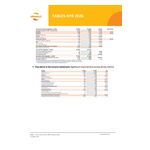
1- Key items in the income statement: Significant improvement across all key metrics
Operating margins are growing strongly in 2026, driven by continued like-for-like revenue growth (+6.0%) and effective control of operating expenses. EBITDAR margins are also rising across all geographic regions, with a significant contribution from France and Northern Europe, as well as strong growth in Southern Europe. Growth on a current scope basis stands at +3.5%, marginally reduced by operational disposals in 2025 (senior living facilities in France and operations in the Czech Republic, as well as the ongoing disposal process of operations in Latin America and Asia (IFRS 5 reclassification)).
On a current scope basis, the Group’s EBITDAR thus rose by +17.5% (+€70m) compared to the first half of 2025.
As a percentage of revenue, the EBITDAR margin now stands at 15.6%, representing an increase of +1.8 pts over the past 12 months.
EBITDA (excluding IFRS 16) also rose sharply (+44.3%, or €70m), benefiting from strong operational momentum as well as effective management of lease expenses (asset acquisitions, lease negotiations, disposals of facilities, etc.).
As a result, recurring operating income (EBIT) rose significantly (up by +€85m to €187m), representing growth of +83.3% over 12 months. For the record, this figure stood at just €102m a year ago and was negative in 2024.
Net income attributable to the Group, although still negative in the first half of the year, is approaching breakeven at -€40 million. It improved by €97m compared to the first half of 2025, benefiting from the marked improvement in operating performance as well as effective control of operating, rental, and financial expenses, suggesting a very encouraging trend for the coming half-years.
As a preliminary note, it should be noted that, as part of its financial reporting, the Group is changing the geographic breakdown of its activities effective January1, 2026, to better align with emeis’s strategy of focusing on various European markets.
Going forward, emeis will report using the following breakdown5 :
- The Northern Europe region includes Germany, the Netherlands, Belgium, Ireland, the United Kingdom, and Luxembourg
- The Central Europe region includes Austria, Switzerland, Poland, Slovenia, and Croatia
- The Southern Europe region includes Spain, Italy, and Portugal, but no longer includes Latin America
- The “Other Regions” category thus includes the remaining operations in China and Latin America
The breakdown of revenue, EBITDAR, and occupancy rates by region is provided in the appendix to this press release, along with the previous geographic breakdown that was in effect until now.
2- Revenue: organic growth of +6.0%, driven by nursing homes (+7.1%) and international operations (+7.5%)
As of the end of June 2026, the Group’s revenue stood at €3,011m, up +6.0% on a lfl basis, continuing the trend seen in 2025 and reflecting sustained momentum, particularly in the nursing home segment (+7.1% lfl) and internationally (+7.5% lfl).
On a current scope basis, revenue grew by +3.5%, impacted by the disposals of operations in the Czech Republic (end of March 2025) and senior living facilities in France (early November 2025), as well as by the reclassification of operations in Latin America and Asia under IFRS 5 (operations held for sale).
This increase reflects a combination of three factors, all of which are trending positively:
- A positive price effect supporting like-for-like growth by +3.4%, in line with the impact recorded at the end of December 2025;
- An increase in the average occupancy rate at the end of June of +2.8 pts, contributing +1.8% to like-for-like growth;
- Facilities opened recently, since early 2025, whose ramp-up contributed +0.8% to like-for-like growth.
In the nursing home segment (which accounts for 2/3 of the Group’s business), like-for-like revenue growth reached +7.1% at the end of June, driven by a significant increase in the average occupancy rate (+2.9 pts), a favorable pricing effect, and the ramp-up of new facilities. This trend signals the continuation of a marked recovery in this business in 2025.
The Clinics segment (1/3 of total revenue, 63% SMR and 37% psychiatric) also posted strong momentum, with like-for-like revenue growth of +4.1%. This improvement, particularly in France, was driven by favorable base effects and various one-off factors, but it also benefited from operational corrective measures implemented throughout 2025, which helped restore a favorable dynamic particularly regarding the marketing of private rooms.
Internationally, the half-year followed the same very favorable trend as in previous half-years, with an average like-for-like growth rate of +7.5%, driven by particularly strong performance in the Netherlands, Poland, and the Iberian Peninsula, where growth rates exceeded +10%.
This performance was driven by strong rate increases (in Austria, Germany, and Spain), higher occupancy rates (particularly in Spain and Belgium, as well as in Italy and Poland), and the ramp-up of recently opened facilities (in the Netherlands and, to a lesser extent, in Portugal and Spain). Southern Europe (primarily Spain and Italy) and Central Europe (notably Austria and Switzerland) are the regions with the highest growth rates.
- Of particular note is the very strong performance of operations in Southern Europe, where revenue grew by +8.4% like-for-like. This performance is attributable to a sharp increase in occupancy rates (now above 92% in Spain and Italy), the ramp-up of recently delivered facilities, and the decision in Italy to divest underperforming facilities by the end of 2025.
- The Netherlands and Poland posted double-digit growth rates on a like-for-like basis, while German nursing homes came close to that level.
In France:
- Revenue from clinics in France as of the end of June 2026 rose by +4.7% like-for-like, benefiting in part from favorable non-recurring effects (a negative base effect in the first quarter of 2025 and a positive one-off effect in the first quarter of 2026). As announced, the pace of like-for-like growth is naturally moderating starting in the second quarter. However, this growth remains encouraging and reflects the sequential improvement observed quarter after quarter, following a first quarter of 2025 that fell short of expectations, particularly regarding the sale of private rooms.
- Revenue from nursing homes in France rose by +3.2% on a like-for-like basis, driven primarily by an improvement in the average occupancy rate of the Group’s facilities. On a current scope basis, growth stood at +2.1% due to the sale of independent senior living residences in the second half of 2025.
3- Occupancy rates rose across all geographic regions: +2.9 pts for nursing homes and +2.8 pts overall
The Group’s average occupancy rate rose by +2.8 pts year-over-year, reaching 89.8% in the first half of 2026 (and 90.4% on a like-for-like basis, excluding recent openings).
emeis thus continues to increase its average occupancy rate at an unabated pace. For reference, this rate was 87% in H1 2025, 85.3% in H1 2024, and 82.7% in H1 2023, suggesting that the trend is likely to continue further.
This performance is driven by ongoing efforts to improve the quality of care, marketing processes, and the development of a segmented service offering that closely aligns with the needs of residents and patients. It also stems from the effective management of flu outbreaks during the half-year, notably through the implementation of proactive health protocols. To date, the Group’s facilities have also adapted to heat waves, protecting residents from heat-related health risks and helping to maintain occupancy rates. It should be noted that all facilities have an air-conditioned common area and that more than half of the private rooms in France are already air-conditioned as well—a rate that is significantly higher than the industry average.
The recovery is driven in particular by nursing homes, where the occupancy rate rose by +2.9 pts year-over-year to 89.4%. It also increased by +2.0 pts at clinics, reaching 91.1%.
The significant improvement in sales efficiency is a major driver of the increase in occupancy rates at the Group’s facilities. For example, in nursing homes in France, the number of prospects residents continued to grow in the first half of the year, with volume up +41% from two years ago and up +22% compared to the first half of 2025. This momentum is driven by digital channels, which now account for nearly 30% of prospective residents (vs. 5% in H1 2024 and 15% in H1 2025). As a result, the number of new residents admitted to facilities in the first half of 2026 was up +21% compared to the first half of 2024.
Average occupancy rates are rising across all geographic regions:
- In France (41% of the Group’s revenue), the average occupancy rate now stands at 89.9%, up +2.4 pts from last year.
For nursing homes, the occupancy rate stood at 87.5%, an improvement of +3.8 pts year-over-year. This increase reflects both improved marketing processes and the effects of quality-enhancement measures implemented in recent years, as well as the disposal of underperforming operations (senior residences) whose occupancy rates were lower than those of the rest of the portfolio. In addition, nearly one-third of this improvement stems from the removal (effective 1st of January) from the denominator of beds that were previously counted but were not marketable.
- In Northern Europe6 (34% of revenue), the positive momentum continues. In Germany, the Group’s second-largest market, the notable improvement of +3.4 pts in the occupancy rate partly reflects the measures implemented to enhance quality, with services segmented since 2024 according to residents’ needs. These favorable effects are gradually taking hold.
In the Netherlands, the strong momentum observed reflects the ramp-up of recently opened facilities, while in Belgium, the sharp rise in the average occupancy rate stems from the closure of certain facilities that were structurally underperforming.
Only Ireland posted a decline in occupancy vs. H1 2025, due to the temporary suspension of admissions at certain facilities during the year; however, this rate has improved compared to the first quarter, signaling a rapid recovery in occupancy at these facilities (+5.4 pts in three months), which allows for confident projections.
- In Central Europe7 (18% of revenue), the average occupancy rate now stands at 94%, a sharp increase of +3.1 pts year-over-year, driven in particular by Austria and Poland. In Switzerland, the occupancy rate also continues to rise, exceeding 90% and now standing at over 93%.
- In Southern Europe8 (7% of revenue), the facilities opened in the second half of 2024 and throughout 2025 (in Spain and Portugal) are now nearly at full capacity. The average occupancy rate there rose by 2.6 pts to 91.4%. Of particular note is the very strong performance in Italy, where the occupancy rate is now approaching 94%, up 5 pts in just one year.
4- Operating margins: strong growth on organic basis for EBITDAR (+18.1%) and EBITDA (+46.3%9 )
A recovery trend that began in mid-2024 and continues.
The revenue growth on a like-for-like basis (+6.0%) once again had a very positive impact on operating margins, with increases of +18.1% for EBITDAR and +46.3% for EBITDA (excl. IFRS 16) over a year.
This growth was partly driven by higher capital gains from disposals in the first half of the year, which totaled €23m in the first half of 2026 (vs. €5m in H1 2025). However, adjusted for this item, EBITDA growth (excluding IFRS 16) remained very strong (+37.3% on a like-for-like basis).
As a percentage of revenue, margins rose by approximately +2 pts over 12 months, reflecting the increasing efficiency of the Group’s cost structure, the benefits of rising occupancy rates, and the capture of a favorable price effect. This performance is on par with the improvement observed in the first half of 2025 compared to the first half of 2024, indicating that the recovery trajectory is continuing at a significant pace.
- The EBITDAR margin for the first half of the year thus increased by +1.8 pts, although it remains below the Group’s target, at 15.6% of revenue (vs. 13.8% in H1 2025 and 11.4% in H1 2024).
- The EBITDA margin (excluding IFRS 16) also rose significantly (+2.2 pts), now standing at 7.6% of revenue (vs. 5.4% in H1 2025 and 3.3% in H1 2024)
By geographic region:
- In millions of euros, the two main geographic regions contributing most to the Group’s EBITDAR growth are France (+€25m) and Northern Europe (+€13m).
-
The geographic regions with the strongest EBITDAR growth are France (+20.8% on a like-for-like basis) and Southern Europe (+23.7%).
- In France, operations continue on a path of gradual normalization of operating performance, though margin levels remain below the Group’s targets for the coming fiscal years. The margin is beginning to benefit from the initial effects of the “Boost” program (see below).
- In Southern Europe, momentum is very strong, both in terms of occupancy rates and pricing power.
These results thus reflect the impact of business growth, bolstered by effective control of operating expenses, whose growth - particularly in France - remains significantly lower than that of revenue. Consequently, nearly 68% of the increase in revenue is reflected in EBITDA (excluding IFRS 16). It should be noted, however, that this rate is partly attributable to changes in the scope of consolidation currently underway (accounting under IFRS 5, particularly for operations in Latin America) or completed over the past year (notably independent senior living facilities in France), whose operating performance was weaker than that of the rest of the Group.
The improvement in the Group’s operating performance also reflects progress made under the “Boost” program, launched in France in 2025 to optimize external spending and strengthen cost control.
This initiative is yielding multiple benefits: improved service quality, strengthened risk management, better working conditions, and higher resident satisfaction. These advances are gradually translating into tangible value creation through reduced operating expenses, a more efficient allocation of expenses, and the development of value-added services.
The measures implemented are therefore expected to reduce operating expenses in France by approximately -2% per year in the coming years. The results observed in the first half of 2026 reinforce confidence for this trajectory and support the gradual rollout of similar initiatives in the Group’s other regions. These initial results thus bolster the Group’s confidence in its projections for the second half of the year and for the coming fiscal years.
5- Disposals: A now opportunistic Approach
A total of more than €1 billion in disposals were finalized during the first half of the year or were secured as of the end of June 2026, including:
- €761 million received in mid-January 2026 from the creation of Isemia, which was open to third-party investors, representing 62% of the appraised value of a pan-European portfolio of 68 assets located in France, Spain, and Germany.
- €114 million from other real estate disposals finalized and cashed in during first half of the year, 64% of which were sales-and-lease-back transactions with an average yield of 4.9%. These disposals primarily involve assets located in Ireland (28%), Switzerland (19%), Portugal (19%), Latin America (15%), and France (15%).
- €156 million in secured disposal transactions remain to be received, of which at least €25 million is expected during the second half of the year.
Now that the disposal plan has been significantly exceeded, the Group’s financial structure has been substantially and sustainably strengthened, and emeis’ operating performance continues to show a positive trend quarter after quarter, the Group intends to be particularly selective and opportunistic regarding any further disposals in the coming fiscal years.
Update on the process for the disposal of activities in the Latam region, with nearly 70% finalized as of the end of June
emeis has initiated a process for the disposal of all of its operations in Latin America10 . These disposals are expected to be completed largely in stages throughout 2026.
As of the end of June 2026:
- Nearly 70% of the disposal process has already been secured, through sales for which proceeds have already been received or are expected to be received in the coming quarters.
- Nearly 30% of the disposal of the entire Latam portfolio has already been finalized (primarily real estate assets), with proceeds received during the first half of the year.
6- Cash Flow: Strong operating contribution and non-recurring transitional factors reflecting the Group’s structural normalization
The cash flow statement for the first half of the year was positively impacted by improved operating performance but negatively affected by temporary factors resulting from the Group’s normalization across several areas.
Net Current Operating Cash Flow remained broadly stable (down by -€5m) at €57m, despite an exceptional change in working capital of approximately -€84m.
Recurring cash flow also remained broadly stable (up by €5m compared to H1 2025), benefiting from a reduction in financial expenses.
Finally, free cash flow (FCF) was negative at -€153m in the first half of the year, impacted in particular by the exceptional transitional effects of the Group’s exit from the “ ” safeguard plan (balance of tax and social security liabilities) . It does not take into account the Isemia transaction, which was treated as a change in equity.
Significant improvement in the Group’s operating and financial performance
- EBITDA (excluding IFRS 16) rose by +44%. This strong growth reflects the continued improvement in the Group’s operating performance, as explained above, and this momentum is expected to continue in the coming semesters.
- Financial expenses decreased by -9%. This improvement reflects both the reduction in debt levels and the effects of the bank debt refinancing finalized in December 2025.
One-time items related to the structural normalization of eMeis
These indicators are being temporarily impacted in certain areas, thereby temporarily wei
Contacts
Press Contacts
Isabelle HERRIER NAUFLE
Director of Media Relations &
Online Reputation
07 70 29 53 74
isabelle.herrier@emeis.com
IMAGE 7
Charlotte LE BARBIER
06 78 37 27 60
clebarbier@image7.fr //
Investor Relations
Samuel Henry Diesbach
Director of Investor Relations
& Capital Markets
Samuel.henry-diesbach@emeis.com
Shareholder Toll-Free Number
0 805 480 480
NEWCAP
Dusan ORESANSKY
01 44 71 94 94
emeis@newcap.eu
Read full story here

